Featured
Table of Contents
To check this view information are required on program costs of different treatments as well as their advantages. There is no recent performance testimonial of wild therapy.
That testimonial was released over two decades earlier therefore requires an update. There is a much more current review Fernee et al. (2017), however that is a qualitative evaluation which explicitly excludes programmes intended for kids presenting annoying practices. Bowen and Neill (2013) carried out a metaanalytic testimonial of outdoor difficulty activities that consisted of 197 researches.
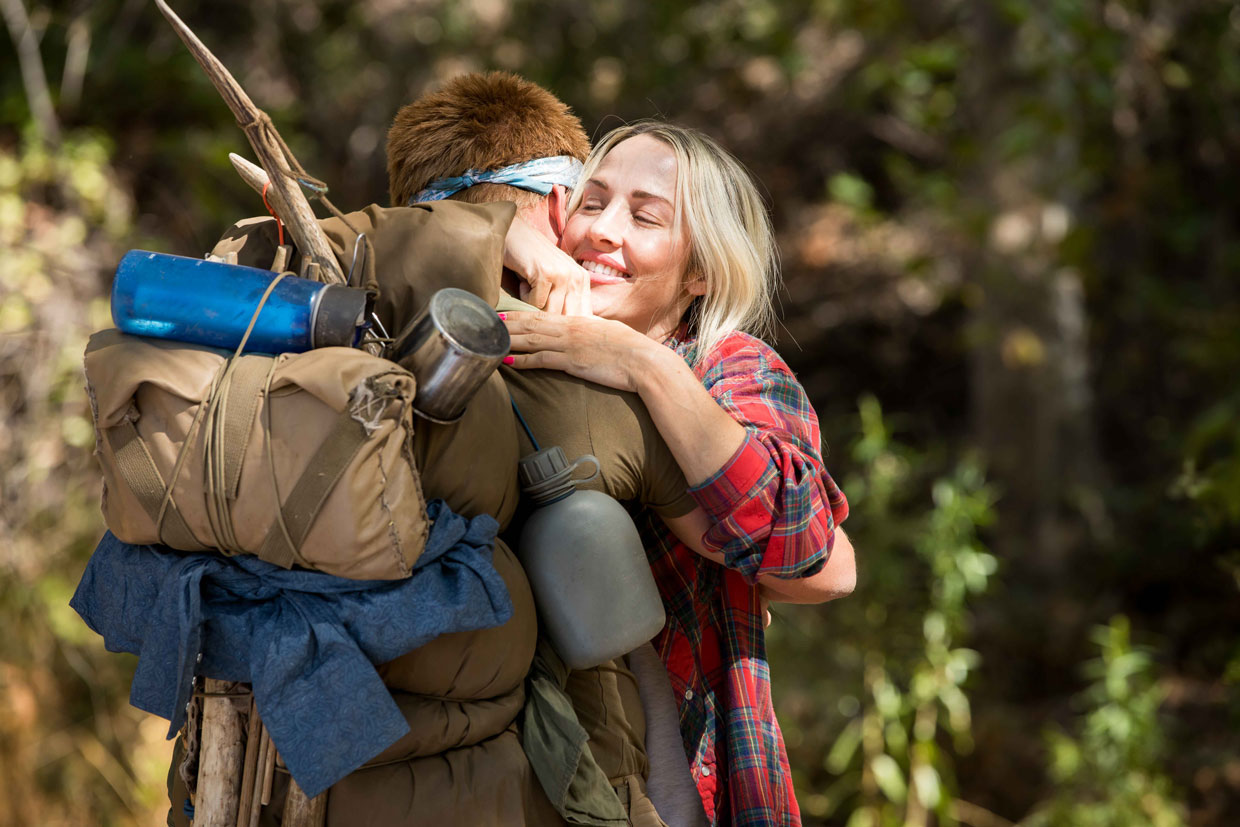
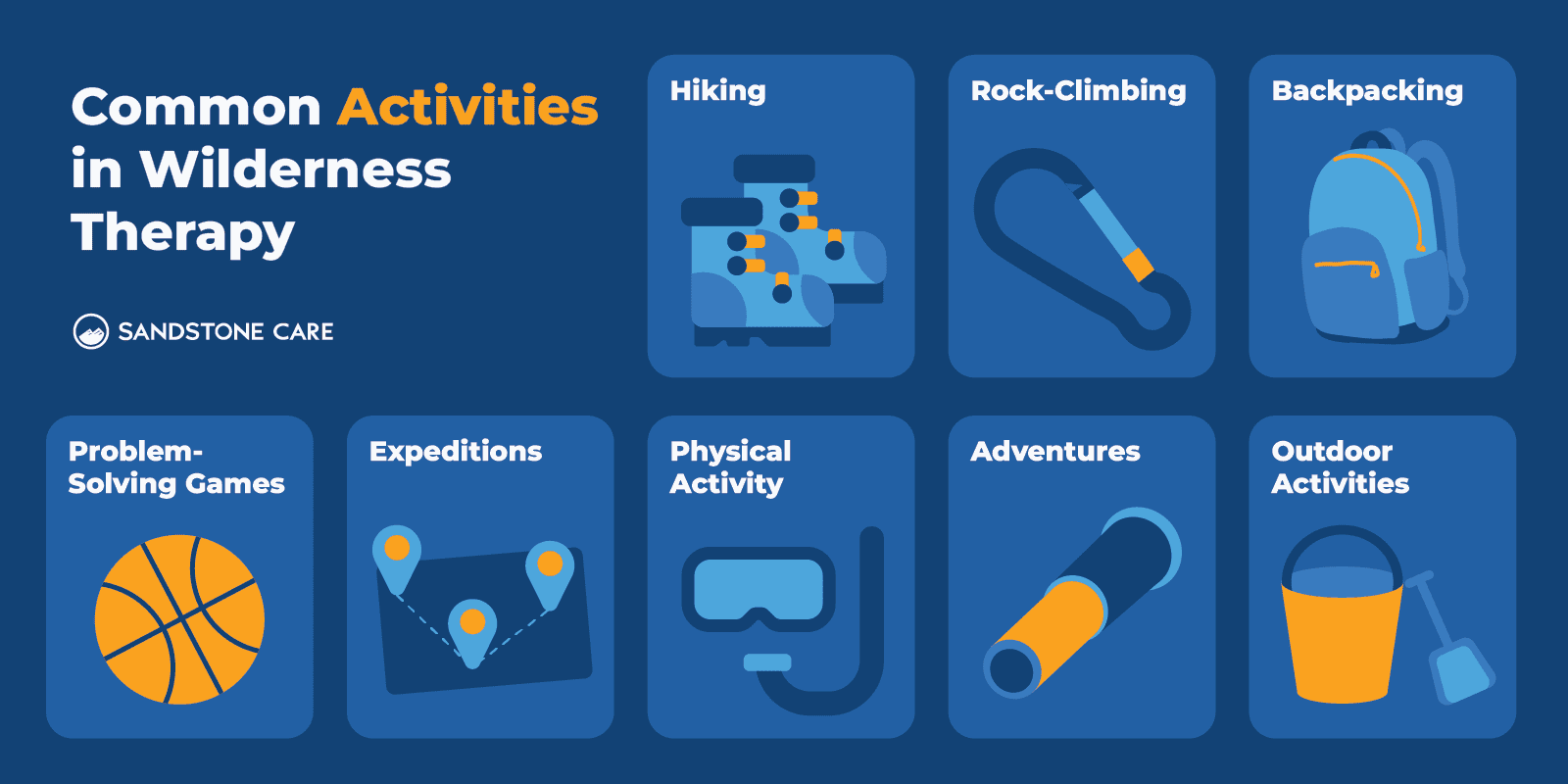
Wild therapy is a professional intervention for both teenagers and young grownups. It can be made use of to attend to not just behavioral difficulties and drug abuse, but social, emotional and relational troubles too. Most wilderness treatments might include any or all of the following: Extended backcountry traveling and wilderness living Constant team living and regular official team therapy sessions to cultivate team effort and social interactions.
Adventure experiences which aid students to establish confidence and strength by allowing them to vacate their convenience zones in a secure and encouraging setting. The use of nature both in reality and allegory within the restorative process. A strong values of treatment, assistance, and safety throughout the healing experience.
Trauma-Focused EMDR for Spiritual Growth & Integration Therapy
It enables the medical professionals to see patterns and behaviors as they come up organically, and to be able to resolve them experientially in the minute, along with processing them vocally. Additionally, it is an evidence based treatment. It is sustained by a significant quantity of research released in peer assessed journals.
Remarkably, information collected from wild programs show that in spite of the dangers that are intrinsic in a few of these tasks they are really fairly secure. Trainees signed up in restorative wild programs were 3 times less most likely to go to a medical emergency situation area than teenagers living at home. Additionally, young adults were 140 times much more likely to be wounded playing senior high school football than taking part in a wild program.
2012). As is the situation for many locations of clinical and psychiatric care, wilderness therapy needs to enhance as the field continues to create.
The covered program must have plans and procedures that cover all prescription and non-prescription drug personnel at the protected program must be given with alignment training before or within 30 days of hire. The positioning has to include training on the adhering to (I) Technique and actions management procedures including de-escalation abilities training, crisis prevention abilities, favorable actions management, and technique methods that are non-punitive in nature and are focused on assisting youngsters in treatment construct favorable individual relationships and self-constraint; and (II) Training might not consist of any type of psychological, mental or abusive of team to youngsters in care should be developed and maintained that will supply appropriate supervision, security and defense for children in treatment.
Preparation Phase at EMDR therapy

It has been shown to be a useful and reliable therapy when other methods have not been successful. Is it 100% reliable? No. Is an extensive backpacking journey (whether as part of a wilderness treatment program or just for entertainment) in some cases uneasy? Absolutely. Do backpackers sometimes locate themselves cool or starving or dirty? Yes.
Were/are there some low quality programs out there? Yes. Did the industry requirement to grow, establish, enhance and tighten up its procedures over the past 25 years? Yes. Have surgeries, radiation treatment and most other medical procedures grown and boosted over this same time period? Certainly. Is wilderness treatment a remedy? No.
Like a lot of people, I function in a workplace and rest in front of a computer all day. Getting out allows me to "leave".
Default Mode Network in Spiritual Growth & Integration Therapy
I enjoy music, but when I trek I desire to leave that all behind. I have a tendency to "zone" out while hiking. My mind disengages and strays where it will. Occasionally that will certainly be exercising issues at home/work, however typically it simply cuts loose. Second, I am a Precursor Master for a neighborhood Police Army and I commonly take a group of children out for backpacking.
We do not permit digital devices, with the exception of GPSr's. Initially, the enforced separate from the technical world generally had them grumbling. Currently, the older young boys urge on it. I took a group to Philmont, NM in 2005, primarily 15 years of age. I heard them on the return speaking with others concerning the "favorite" component of the trip.
No, nearly every person talked regarding the dawn from the ridge, or the number of stars. They chatted in hushed, awe loaded voices. Certain they overcame challenges. WE (grownups) were led by them. They had to decide. We did not rescue them. They misinterpreted maps, obtained "lost" for a while, but conquered every obstacle.
Therapy for me was getting back in contact with the quietude of nature. We shared and grew with each other. Dang, I can never get it right. Each time I attempt to explain to friend or family, I only get part of why I do it. I do understand it is restorative for me.
Session Preparation prior to Psilocybin
Possibly it is a dependency instead of treatment.
A need of her wilderness treatment program, they informed her. Due to the fact that of her eating condition, a team member was with her at all times virtually the entire size of her stay in the Utah desert.

Latest Posts
When Brainspotting Therapy Promotes Recovery in Processing Trauma
Family Honor in Inherited Expectations
Depressive Symptoms Support for Lasting Recovery